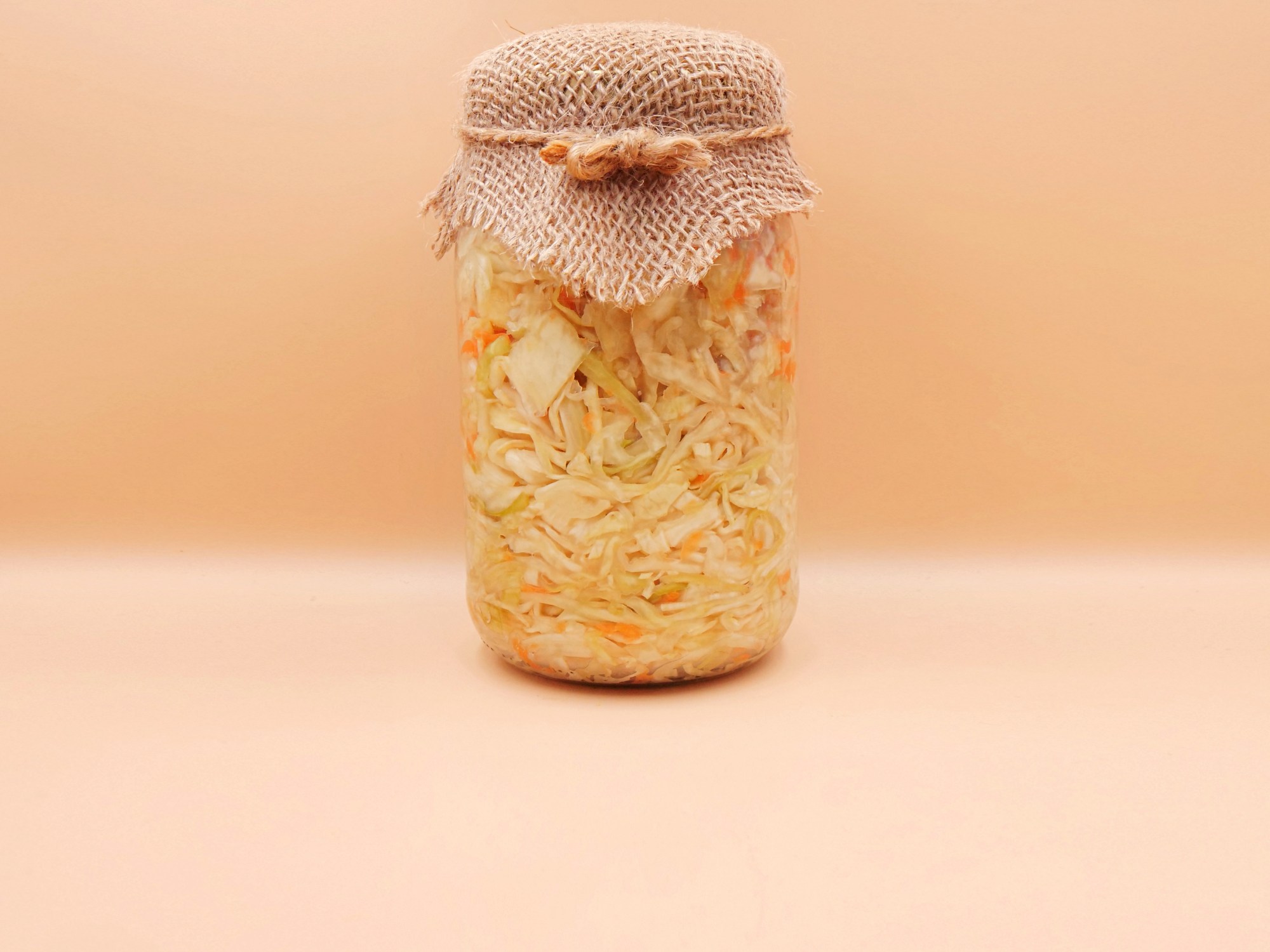
Wash the cabbage, dry it, and cut it into thin strips.
In a bowl, place the chopped cabbage and salt (about 1 tablespoon). Mix thoroughly and leave for 1 hour.
After the specified time, wash the carrot, peel it, and grate it on a medium grater. Add the carrot and optionally spices such as caraway, allspice, juniper, or others to the cabbage. Mix thoroughly.
Transfer to a previously washed and sterilized jar. Firmly tamp down each layer of cabbage, pressing with a clean hand to the bottom. Fill the jar only up to ¾ of its height, as the cabbage will increase in volume.
Cover with a lid (or a cloth), but do not screw it tight, and leave in a warm place for 2-5 days. It's best to place the jar on a tray in case the cabbage juice leaks out. The cabbage must be completely covered with juice.
Several times a day, press down the cabbage using a wooden mallet, rolling pin, or clean hand, and pierce it with a wooden stick or the end of a wooden spoon to the bottom to degas the cabbage (to avoid a bitter taste and spoilage). During fermentation, the cabbage should not come into contact with metal, so remember to pierce and tamp it only with wooden tools.
After 2-4 days, the cabbage is ready to eat. If you want it more fermented, wait a few more days. Once the cabbage is sufficiently fermented, screw the jar and move it to a cooler place, such as the refrigerator. Use within a few weeks.